Showing posts with label castle. Show all posts

Friday, November 28, 2014

Copenhagen, Denmark (Day 2)


Today we took the local train to Hillerod to visit Frederiksborg Castle.

Frederiksborg Castle

Frederiksborg Castle was built as a royal residence for King Christian IV between 1602 to 1620.  The current castle replaced another castle that was built by Frederick II.  Frederiksborg Castle is the largest Renaissance palace in Scandinavia.  It is located on three small islands in Slotsoen (Palace Lake).

Today the castle is the Museum of National History and houses a collection of historical paintings and portraits. 

The King's Prayer Chamber or Oratory contains paintings of the life of Christ by Danish artist Carl Bloch.  

Another view of Frederiksborg Castle

King Frederik VII was living in the palace when a fire broke out on December 16, 1859 and it destroyed a large part of the palace's interior.  The interior of the castle was reconstructed after the fire.


We wanted to take the train to Helsingor to see Elsinore Castle.  We missed the train by one minute.  The next one wasn't until an hour later.  We decided to go to Dragor instead.

Dragor is a quaint little fishing village just outside Copenhagen.  After wandering around the town for a while, we got back on the bus to the train station, and headed back to Copenhagen.


Sunday, November 23, 2014

Gdynia & Gdansk, Poland

We arrived in Gdynia, Poland one hour late.  The sea had seven to twelve foot waves and gale force winds during the night.  Because we were late arriving, we didn't get to see everything that was on the schedule.

Our first stop was the Oliwa Cathedral, which was consecrated in 1594.

GdaƄsk Oliwa Archcathedral

Part of our visit to the cathedral included an organ concert.  The organ was designed and constructed from 1763-1788. At the time, it was the largest organ in Europe.  When the organ is played, the trumpets on the angel statues move as well as spinning stars.

Our next stop was to Marlbork Castle.  We had lunch at the castle and then had a tour.


Malbork Castle

The Teutonic Knights founded Malbork Castle at the end of the twelfth century in what was Prussia at the time.  It was originally called Marienburg, or Mary's Castle.  It was completed in 1406.


The Teutonic Knights were a German Roman Catholic religious order of crusaders.  The castle had to be expanded many times to accommodate the growing number of Knights.  It soon became the largest fortified Gothic building in Europe and is the biggest Teutonic order castle in Europe.  The castle has also served as one of the Polish royal residences.


The castle has undergone major reconstruction and restoration.  The main cathedral was restored just before World War II, was destroyed during the war, and is still in ruins today.  Marlbork Castle is the largest brick building in Europe.


The drive back to Gdansk from Malbork Castle was about an hour, so we had a quick walking tour of old town before going back to the ship.


Old Town Gdansk

Monday, November 17, 2014

Tallin, Estonia

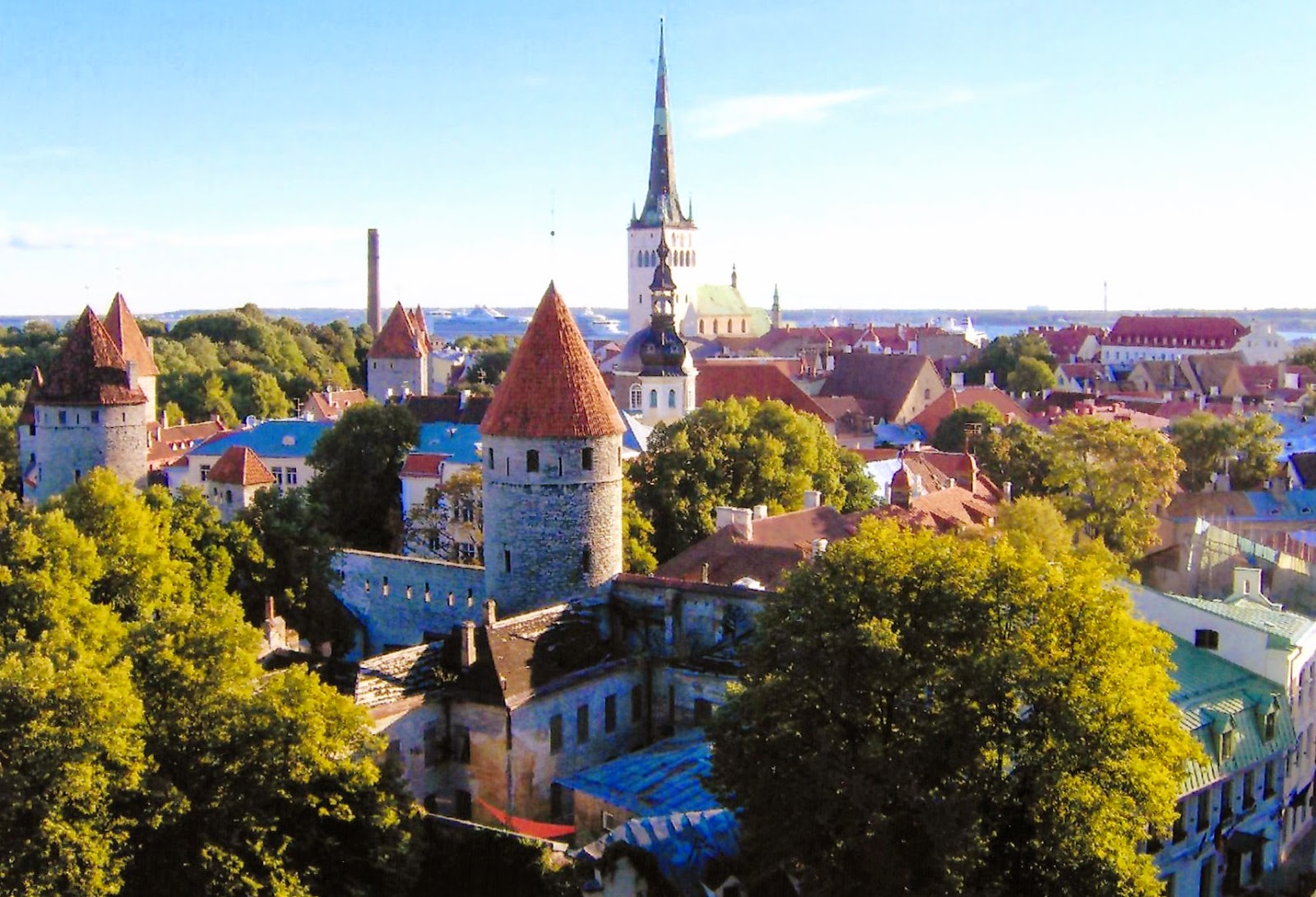
We arrived in Tallin this morning.  You can see our ship in the background to the left of the tallest steeple.


 We started with a walking tour of Old Town.


 View of Town Wall Towers

Old Town is a wonderful example of Gothic architecture.  There is also a medieval market that has existed for over seven centuries.

Viru Gate entrance into Old Town

We walked through the upper section first.  We saw the Toompea Castle, the Dome Church, St. Alexander Nevsky Cathedral and the Town Hall.

Then we walked down to lower town.  There we saw the Church of the Holy Ghost and the Great Guild Hall.

Some other photos taken of Tallin during our walking tour:


After the walking tour we attended an Estonian Folklore show.

The ship was in port only until 3:00pm.  It was a fast-paced tour with lots to see and not enough time.  I definitely want to come back to Tallin and spend more time in this city!

Monday, January 2, 2012

Obidos, Portugal


Obidos was founded by the Celts around 300 BC.  It was later ruled by Romans, Visigoths, and Moors.  The city name comes from the ancient Roman times and means "walled town."  The aqueduct was built in the 16th century and connects Obidos to a nearby spring.


Obidos is protected by the government from modern development.


The main gate in Obidos has blue and white tiles that depict battles and religious scenes.  Tiles similar to these once covered the walls until an earthquake in 1755 shook them off.


Other tiles found throughout the city...


Obidos wall


Obidos Castle